
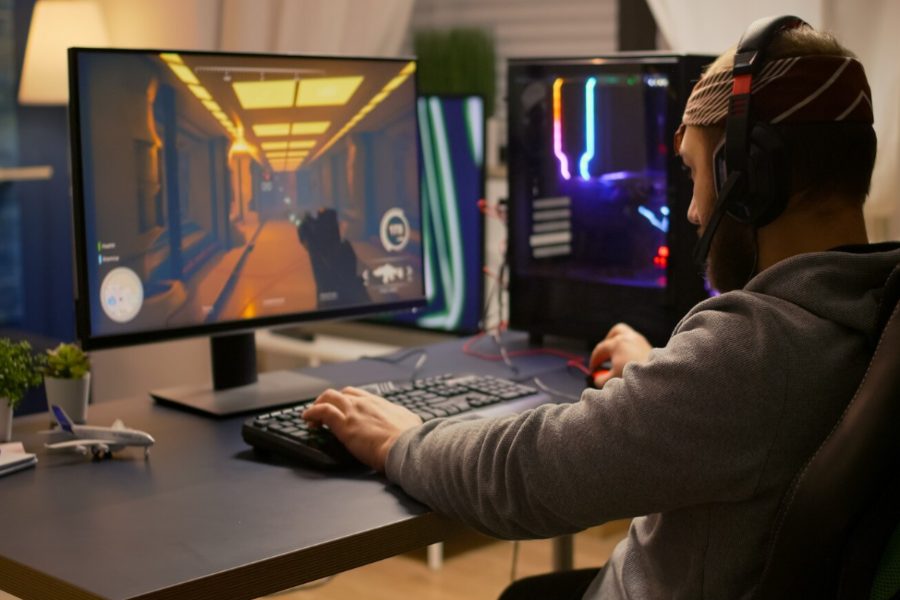
For most of PC gaming history, the marketing centerpiece was graphics. Studios led with screenshots, ray-tracing demos and side-by-side comparisons designed to make the visuals the reason to click install. That era has given way to a more grown-up buying process. Visual fidelity has largely plateaued at the top end of the market, accessible mid-range hardware can run impressive scenes without much trouble, and PC gamers now evaluate titles on a much broader feature checklist before committing the disk space.
Several factors pushed the shift. Hardware diversity expanded sharply with portable Windows handhelds, low-power ultrabooks running games respectably and a wide range of GPU price points all sharing the same digital storefronts. Free-to-play and live-service models have trained players to value long-term content depth over a single visual wow moment. Reviewers and content creators have built audiences around evaluating features rather than running benchmark screenshots. The cumulative effect is that the user opening a Steam page in 2026 is reading for things that have nothing to do with how the game looks.
Performance and optimization come first
Performance has effectively replaced graphics at the top of the feature checklist. Stable framerates, sensible VRAM usage, sane load times and clean shader compilation now matter more than whether the lighting model is fully ray-traced. Players will accept slightly older-looking visuals if the game runs smoothly on a wider range of hardware, and they will refund a beautiful game that stutters within the first hour. Studios that prioritize optimization at the same level as art direction are building stronger reputations than studios still treating performance as a post-launch concern.
Discovery and presentation on the storefront play a much larger role than the older marketing model assumed. Players evaluating windows games on Steam, the Microsoft Store, Epic and GOG now read user benchmarks, Steam Deck verification badges and community-maintained performance threads before installing. The decision sequence is research-heavy in a way that the older “look at the trailer and buy it” model rarely was, and the studios that earn positive performance reputations show up favorably in this research even when their games are not the visual leaders in their genre.
Content depth and replayability
Players have learned to read for hours of gameplay, replay value and meaningful post-launch support before committing. Tightly designed indies like Vampire Survivors and Balatro built devoted audiences on hundreds of hours of loop-based gameplay despite modest visuals, while sprawling RPGs like Baldur’s Gate 3 won audiences with depth in writing and systems rather than pure technical spectacle. The lesson the broader market took from these successes is that a feature checklist heavy with replayability often beats a checklist heavy with visual demos.
The same calculus applies in niche genres where casual and party titles deliver value through replayable structure rather than visual ambition. Games like Gimkit have built dedicated audiences in classroom and quiz-style categories by emphasizing fast rounds, easy onboarding and consistent social play. The broader PC gaming market has absorbed the lesson that breadth of structured content matters more than spectacle across most categories, including the ones that compete on something other than fidelity.
Accessibility and customization
Accessibility features have moved from afterthought to checklist priority. Subtitles with adjustable sizes, colorblind modes, motion sickness reduction, full key remapping and one-handed control layouts are now standard expectations for any PC title hoping to reach a wide audience. The success of releases like Forza Horizon 5 in accessibility-conscious circles proved the market values these features and reads for them in pre-purchase reviews.
Customization sits next to accessibility. Players expect deep settings menus, configurable HUDs, modding support where appropriate and the freedom to shape the experience to their preferences. PC gaming has always rewarded customization more than console gaming, and the studios that build their products around configurability earn loyalty that visual fidelity alone cannot generate.
Social systems and multiplayer features
PC gamers now evaluate titles partly on whether they can play with their existing friend groups. Multiplayer integration, cross-platform play, friendly invite systems, voice chat quality and Discord integration are factors players actually check before installing. Games that launch without co-op or with friction in the invite flow lose to games that make the social experience effortless. The Steam page sections about online play, party size and platform support get more attention than they used to, and the install decision often hinges on whether the social systems hold up.
Pricing transparency and monetization model
The monetization model itself has become a feature. Free-to-play titles need to demonstrate fair progression and transparent purchase options. Paid releases face scrutiny about post-launch content plans, DLC pricing and whether the base game feels complete. Players read Steam reviews specifically for monetization commentary, and a game with messy monetization often suffers in the rankings even when it scores well on other features.
Why the feature checklist quietly replaced the graphics arms race
The PC gaming market has matured into one that rewards feature breadth more than visual showcases. Studios that load up on graphics while neglecting performance, content depth, accessibility and social systems consistently lose to studios that build a deeper feature set with modest visuals. The shift reflects a more discerning audience, a maturing PC gaming market and an information environment where pre-purchase research is dense, public and influential. The studios that read this shift correctly are pulling ahead. The ones still leading with screenshot wars are spending money on the wrong race, and the players who used to fall for that marketing have grown into a different kind of buyer entirely.