
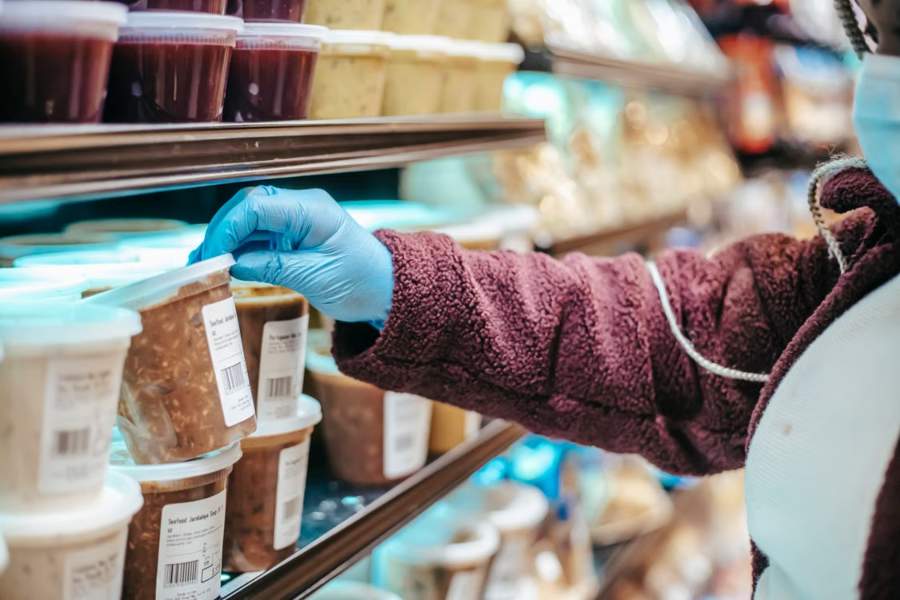
Food label compliance builds consumer trust by guaranteeing that what’s printed on a package matches what’s actually inside it – accurate ingredients, correct allergen warnings, and claims that hold up under regulatory scrutiny. When that guarantee breaks, even once, customers notice fast, and rebuilding their confidence takes far longer than losing it did.
The scale of the problem isn’t theoretical. According to FSIS data, undeclared allergens caused nine recalls out of 42 total USDA-regulated recalls in 2025, ranking as the second most common cause behind foreign material contamination. On the FDA side, allergen-related issues remain a recurring driver of recall activity throughout 2025 as well. These aren’t edge cases – they’re a pattern that repeats across the industry every year.
What Counts as Food Label Compliance
Labeling rules cover far more than calorie counts. They touch ingredient sourcing, claim substantiation, and the exact wording allowed for terms like “healthy” or “natural.”
Ingredient Lists and Claim Accuracy
Every ingredient has to appear in descending order by weight, using terminology regulators actually recognize. A product calling itself “healthy” now has to meet updated criteria the FDA finalized in December 2024, with a compliance date set for February 25, 2028. Until then, manufacturers can choose to follow the new standard early, but most are still operating under the older one.
That transition period creates real risk. Brands updating recipes to qualify for “healthy” under the new rule, while still printing old packaging, can end up with labels that no longer match either standard cleanly.
Allergen Disclosure Requirements
This is the area where mistakes carry the most weight, because the consequences aren’t abstract.
The most common undeclared allergens – wheat, shellfish, eggs, fish, peanuts, milk, tree nuts, sesame, and soybeans – account for roughly 90% of all food allergic reactions, according to FSIS guidance. That single statistic explains why regulators treat allergen labeling as a near-zero-tolerance category rather than a minor administrative detail.
Why Compliance Failures Erode Trust Fast
Trust doesn’t build through marketing copy. It builds through repeated, verifiable accuracy – and it breaks the moment that accuracy fails publicly.
The Real Cost of Mislabeling
A single mislabeling incident rarely stays contained to one batch or one store. Recent recall data illustrates how quickly volume escalates:
| Period | FDA Recalls | Units Affected |
| Q3 2024 | – | – |
| Q3 2025 | 145 events | 25.17 million units |
| Year-to-date 2025 | 415 events | 109.74 million units |
| Year-to-date 2024 | 363 events | 45.02 million units |
Source: Sedgwick Brand Protection data, via Food Safety News.
That’s a 75.8% jump in affected units between Q2 and Q3 2025 alone. Undeclared allergens were responsible for 8 million of those affected units in Q3, including a single recall of 1.11 million frozen fruit bars over undeclared milk.
Pro tip: Recalls almost never trace back to a manufacturing defect. They trace back to a documentation gap between what a product spec says and what the label actually prints – a discrepancy a routine food label compliance review is specifically designed to catch before products ship.
What Erodes Faster Than the Product Itself
Once a brand issues a recall, three things tend to happen in sequence:
- Retailers start questioning other SKUs from the same manufacturer, not just the recalled one.
- Regulatory scrutiny increases on future submissions from that company.
- Customers who switch brands during a recall often don’t switch back, even after the issue is resolved.
None of this requires bad intent on the manufacturer’s part. Most mislabeling traces back to a supplier swap that wasn’t reflected on packaging, or a recipe tweak that skipped the final compliance check.
Building a Process That Actually Holds Up
So what separates companies that avoid these problems from companies that don’t? Usually, it’s structure rather than luck.
Scheduling Routine Reviews
A periodic food labeling compliance review functions as a checkpoint, not a one-time certification. It catches small inconsistencies – an outdated serving size, an allergen statement that wasn’t updated after a formulation change – before they reach a retail shelf.
Companies serious about this tend to follow a similar rhythm:
- Cross-check current formulations against the printed ingredient list every time a supplier or recipe changes.
- Re-verify nutrition panel figures against current lab testing rather than carrying over older data.
- Confirm that regulated claims – “healthy,” “gluten-free,” “non-GMO” – still meet definitions that may have shifted since the last review.
Why Specialized Review Matters More Now
Regulatory language is dense, and the rules keep moving. The FDA’s updated General Food Labeling Requirements Compliance Program, revised in June 2025, replaced a version that had been in use since 2010 – a fifteen-year gap that left plenty of room for outdated assumptions to calcify into standard practice.
A dedicated food labeling compliance review process, whether handled internally or through outside specialists, exists to catch exactly that kind of drift. getgen.ai and similar tools have emerged specifically to automate the comparison between product specs and label artwork, since that gap between documentation and print is where most preventable recalls originate.
What This Means for Long-Term Brand Trust
Companies that treat food label compliance as a strategic priority, not just a legal obligation, tend to weather industry-wide scrutiny better than competitors scrambling to catch up.
Why Transparency Pays Off
When a competitor faces a recall, customers often start scrutinizing every brand on the shelf, including ones with a clean record. Brands with a consistent compliance history absorb that wave of suspicion more easily than ones with no track record to point to.
Some manufacturers now print QR codes linking to lab results or sourcing documentation. That goes beyond what’s legally required, but it signals a level of confidence that resonates with shoppers who’ve grown more comfortable verifying claims independently.
Frequently Asked Questions
What’s the difference between a food label compliance review and a one-time audit?
A one-time audit checks a label against current rules at a single point in time. A review process repeats that check on a schedule, catching changes in formulation, suppliers, or regulation that happen between audits.
How often should companies run a food labeling compliance review?
It depends on how often recipes or suppliers change. Companies with stable formulations might review annually; those reformulating frequently need a tighter cycle, often quarterly.
Does the new FDA “healthy” rule apply immediately?
No. The rule took effect April 28, 2025, but the compliance date isn’t until February 25, 2028. Manufacturers can adopt the new criteria early but aren’t required to until then.
What are the most commonly undeclared allergens in recalls?
FSIS and FDA data consistently point to milk, soy, and tree nuts as the most frequent causes, with sesame added as a major allergen requiring disclosure since 2023.