
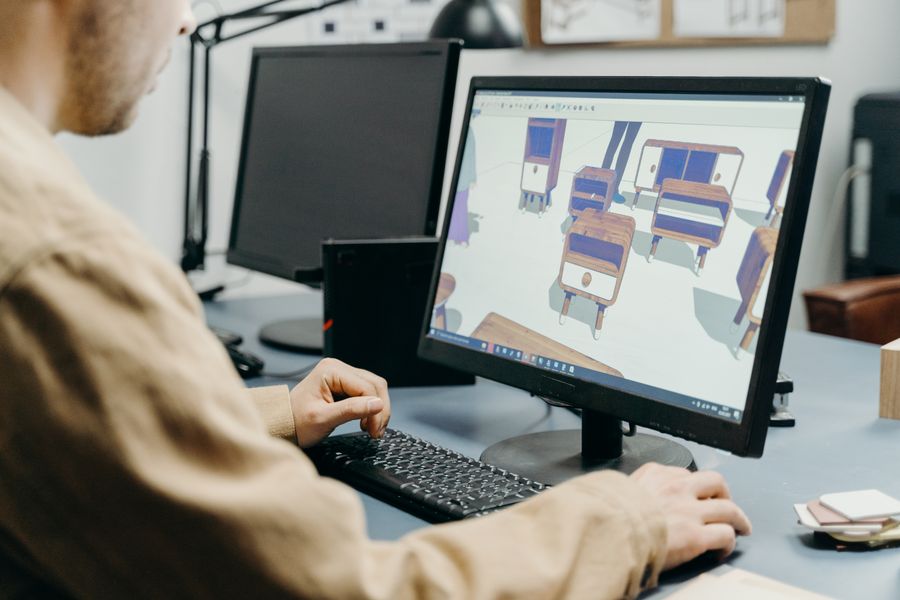
The boundaries between art and analytics have never been thinner than they are in the current era of rapid digital transformation. In the past, visuals were selected at the intersection of the creative teams’ own vision and the brand managers’ suggestions. The modern approach to graphic design is based a lot more heavily on precise data. Analytics helps teams understand exactly which visual patterns attract clients, how users interact with content, and which interface elements cause difficulties.
From Creative Intuition to Deep Analytics
Building a strong brand no longer resembles a lottery with an unpredictable outcome. Professional creative studios begin any project with detailed market research. Only after obtaining precise qualitative and quantitative indicators do specialists transition to the stage of first sketches and prototypes.
High-quality audience research allows teams to identify the real pain points, needs, and hidden motives of future users. Designers study demographic indicators, interests, lifestyle, and consumer habits to adapt the visual language to expectations. This analytical phase lays a solid foundation on which marketers build the overall creative strategy of the company. Instead of random hypotheses, the team receives a clear roadmap that reduces risks when launching new products and services.
In parallel, specialists conduct comprehensive market research: they thoroughly study competitor solutions and current market niches. Understanding which visual and functional approaches other players already use helps find unique creative solutions. Studying consumer behavior provides an opportunity to predict the audience reaction to certain design changes. Based on these data, designers formulate key user insights that direct the subsequent development process of visual content.
Transforming Data into Visual Images
When analysts hand over research results to the creative department, the most difficult phase of work begins. Designers must translate dry numbers, percentages, and charts into the language of colors, shapes, and fonts. This process requires a deep understanding of the laws of visual perception.
Each element of the future identity performs a specific practical function. For example, correct typography can significantly increase reading speed and improve the perception of core brand messages. Designers select fonts based on readability data on various screen types and the emotional perception of specific letterforms. As a result of painstaking work, a unique visual identity emerges, which distinguishes the company from competitors and communicates its values.
Specialists use data to optimize the following visual elements:
- choosing a color palette based on the emotional response of the target audience;
- selecting font pairs to improve text readability;
- structuring the modular grid of the interface to guide the user’s eye correctly;
- adapting graphic illustrations to the cultural characteristics of the target region;
- positioning key buttons based on customer click heatmaps.
Data collection fundamentally alters the conventional creative process. Instead of creating a single final version, designers develop several different concepts and test them on real users. Web analytics tools record page scroll depth, gaze dwell time on banners, and the conversion rates of various interface solutions. A logical approach allows teams to discard ineffective ideas during the prototyping stage and focus resources on developing promising solutions. Thanks to this, visual storytelling becomes a precise tool that guides the user along a pre-planned scenario.
Design Systems and User Experience
The modern consumer interacts with a brand through many different channels. A user can begin their acquaintance with a company through a mobile application, continue on the official website, and complete a purchase in a retail store. The task of designers involves making this journey as easy, consistent, and memorable as possible.
Quality UX design manages the logic of user interaction with a digital product. Interface designers analyze every step of the customer to eliminate any barriers on the way to the target action. Systematic work on interface improvement directly affects the overall user experience, which ultimately influences customer loyalty to the brand. If a mobile application works quickly and intuitively, the consumer will return to it with a higher probability.
To maintain visual unity across all platforms, large companies build scalable design systems. These systems represent libraries of standardized components that developers and designers can reuse in various projects. Having a single base of elements accelerates the development of new features and guarantees that the brand looks consistent on any device. This strengthens the cohesive digital branding positioning of the company in the market.
The process of integrating analytics into design systems implies the following steps:
- Gathering and filtering incoming information about customer behavior on the web platform.
- Designing and testing interactive interface prototypes with focus groups.
- Systematizing successful interaction patterns.
To evaluate the effectiveness of implemented solutions, specialists regularly conduct comprehensive research under the name of design analytics. They track key performance indicators: shopping cart abandonment rates, user task completion times, and customer satisfaction indexes. Analyzing these metrics allows teams to notice negative changes in time and adjust interface elements. Ultimately, this directly affects brand perception. Engineers build solutions that constantly improve the overall customer experience, making every interaction with the brand pleasant and memorable.
Data Collection Tools and Technical Solutions for Designers
Quality analytics requires reliable tools for information gathering. Designers and marketers cannot limit themselves to superficial data from open sources. To conduct a deep analysis of competitors, study local markets, and track user behavior, specialists use advanced software systems.
Search engines and social networks often restrict the number of requests from a single IP address, which hinders automated data collection. To bypass these limitations and obtain an objective market picture, analysts use proxy servers. However, teams cannot trust all tools. A high-quality proxy by Proxy-Seller allows systems to distribute requests, mask automated parsing, and harvest data without the risk of blocks from target platforms. This opens up access to regional content and helps study local design trends in different countries.
To perform highly specialized tasks, such as monitoring competitor search engine results and analyzing their visual strategy, marketers apply targeted tools. Specialists often choose a cheap residential proxy for SEO tasks to mimic the behavior of real users on residential internet service providers. A logical approach guarantees the acquisition of reliable search engine data without distortions or blocks. This allows creative teams to adjust their advertising campaigns accurately and optimize graphic content.
Ethical Boundaries of Analytics
The pursuit of high conversions and interface optimization based on dry numbers hides a hidden danger. Sometimes designers, in an effort to improve short-term business performance indicators, begin using manipulative techniques that specialists call “dark patterns.” For example, hidden checkboxes in a shopping cart, a confusing subscription cancellation process, or masking advertisements as useful content can temporarily increase sales. However, in the long term, such methods cause irreparable damage to the brand’s reputation.
The professional community of designers and marketers calls for finding a reasonable balance between business metrics and respect for the user. Ethical design requires specialists to evaluate the long-term psychological consequences of each decision. Professionals must remember that behind every number in an analytical report stands a real person with their own expectations, trust levels, and needs. If analytics shows a surge in sales after complicating the order cancellation form, this points to a short-term manipulation that will ultimately lead to audience churn.
To maintain ethical standards when working with data, teams implement the following rules:
- ensuring full transparency of purchase, subscription, and financial billing terms;
- designing simple and understandable mechanisms for service cancellation or account deletion;
- refusing to artificially create artificial scarcity or a false sense of urgency to manipulate choice;
- conducting regular qualitative interviews to assess long-term user satisfaction.
Compliance with these principles helps brands build truly sustainable digital products. Clients value honesty, transparency, and predictability, so a respectful attitude toward their free choice ultimately significantly increases the consumer loyalty index. Attentive consideration of acceptable boundaries when analyzing behavior transforms data collection into an instrument of genuine care for the customer. A logical approach lays a solid foundation for strengthening a positive brand image in the market.
Conclusion
Integrating analytics into the creative process does not limit the freedom of designers, but on the contrary, opens up new opportunities. Data frees teams from the need to argue about personal tastes and allows them to focus on finding solutions that truly work for the benefit of the business and users. Modern design represents a harmonious union of aesthetics and mathematical precision, where every pixel, font, and color receives a clear analytical justification.