
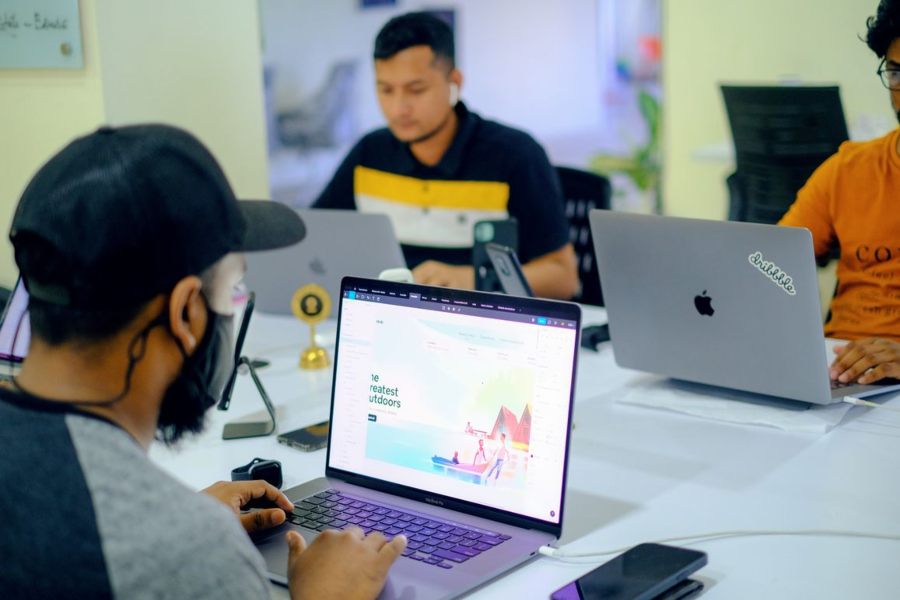
A founder has a product demo in three weeks. Sales needs a sharper website. Marketing wants landing pages for a paid campaign. The CTO is already buried in roadmap calls, bug fixes, analytics issues, and interviews with frontend candidates who may or may not accept the offer.
That is where the hiring conversation has changed.
For years, the default startup move was simple: raise money, hire developers, expand the internal team, and call it growth. In 2026, many U.S. startups are more cautious. They still need strong technical execution, but they are no longer convinced that every web project requires a full-time hire.
Instead, more companies are using outsourced web development teams to launch MVPs, rebuild websites, improve ecommerce flows, connect CRMs, and ship product-facing platforms without adding permanent headcount too early.
This is not only about saving money. It is about avoiding delay.
Hiring Developers Has Become a Bottleneck
A strong developer is expensive, but the bigger problem is time.
The U.S. Bureau of Labor Statistics lists the median annual wage for software developers at $133,080 as of May 2024, while employment for software developers, QA analysts, and testers is projected to grow 15% from 2024 to 2034. In other words, technical talent is still in demand, and startups are not hiring in an easy market.
Salary is only the visible number. Recruiting, onboarding, management, benefits, equipment, and the risk of a wrong hire all sit behind it. For a startup trying to launch before a funding milestone or customer deadline, a two-month hiring cycle can quietly become the most expensive part of the project.
This is where many teams misjudge the problem. They think they are choosing between “hire” and “outsource.” In reality, they are choosing between waiting for capacity and accessing it now.
The New Model: Core Team Plus Outsourced Seniors
The most effective startups are not outsourcing their company. They are protecting the focus of their internal team.
The common model looks like this: product vision, customer insight, brand direction, and technical ownership stay inside. Execution capacity expands through outsourced senior developers who can handle defined workstreams — websites, MVP interfaces, backend integrations, CMS builds, dashboards, or platform improvements.
That balance matters.
A founder or CTO should still own the product logic. But they may not need to hire a full-time developer just to rebuild a marketing site, connect Stripe to an internal dashboard, or ship a beta version of a client portal.
The hybrid approach gives startups a practical middle ground. Internal leaders make the decisions. External developers help move the work through design, development, QA, launch, and iteration.
For teams that need that kind of execution without expanding payroll, an outsourced web development partner like Hutkofits naturally into the shift: helping startups build websites, platforms, MVPs, and business tools while the core team stays lean.
Why MVP Speed Is Driving the Trend
Before product-market fit, every month matters.
A SaaS startup may need a working beta before investor meetings. An ecommerce business may need a faster checkout before the holiday season. A B2B company may need a customer portal because onboarding is still being managed through emails and spreadsheets.
In these cases, hiring is often too slow for the business reality.
Outsourced web development teams can step in around a specific launch target. They already have developers, project managers, QA routines, and delivery habits in place. That does not mean every outsourced project works well. It means the startup avoids building a hiring process before building the thing customers actually need.
The issue usually appears later when founders treat outsourcing like a task dump. A good partner still needs context: who the users are, how the sales process works, what systems are already in place, and what the first version must prove.
Without that, a team can build exactly what was requested and still miss the business point.
Leaner Startup Teams Are Becoming Normal
Startup teams are also getting more selective about headcount. Carta’s 2026 compensation report noted that technical compensation remains competitive, especially around AI and engineering roles, while startup teams continue to think carefully about how and when they hire.
That pressure changes priorities. Founders want senior-level output, but they do not always want the fixed cost of a larger team. Investors want discipline. Customers still expect polished digital experiences. Marketing teams still need speed.
Outsourcing becomes useful when the work is important but not necessarily permanent.
A startup may need a development team for eight weeks, not eight years. It may need a senior frontend developer for a launch sprint, not another full-time employee. It may need technical architecture support for an MVP before deciding whether the product deserves a larger internal engineering team.
That sounds practical until the business grows. Then quality becomes the difference between leverage and technical debt.
What Startups Should Outsource — And What They Should Keep
Not every function belongs outside the company.
Product strategy should stay internal. Customer research should stay internal. Final decisions about roadmap, positioning, pricing, and data ownership should stay close to the founders and leadership team.
But many web development projects are ideal for external execution: marketing websites, landing pages, MVP builds, ecommerce improvements, dashboards, API integrations, CMS restructuring, and internal workflow tools.
The best outsourced teams do not just ask, “What framework should we use?” They ask better questions.
How will the marketing team update this page later?
Where does lead data go after the form is submitted?
Which CRM fields matter for sales?
What happens when the first 500 users sign up?
Who maintains the platform after launch?
These questions separate a development partner from a vendor.
Common Questions Startup Teams Ask
Is outsourced web development cheaper than hiring?
Usually, it can reduce fixed costs, but the bigger value is speed. Startups use outsourced teams to avoid long hiring cycles and get experienced developers working on a defined launch goal faster.
Should a startup outsource its MVP?
Often, yes — especially when the internal team is small and the MVP needs to prove a business idea quickly. The key is keeping scope tight and making sure the startup still owns product direction.
Will an outsourced team understand our business?
A good one will ask enough questions to understand the workflow, users, and commercial goal. If a team only talks about code and never asks about operations, sales, analytics, or customer behavior, that is a warning sign.
When is in-house hiring still better?
In-house hiring is better when the role is permanent, strategic, and tied to long-term product ownership. A founding engineer, technical lead, or core platform owner should usually sit close to the company.
The Smarter Hiring Question for 2026
The old question was, “Who should we hire next?”
The better question now is, “What must we own internally, and what can we build faster with outside senior capacity?”
That shift explains why outsourced web development teams are becoming part of the U.S. startup operating model. Founders are not giving up control. They are choosing where control actually matters.
A startup does not win because every line of code was written by an employee. It wins because the right product reaches the market on time, works for real users, and does not overload the team before the business is ready to scale.
The smartest startups are not replacing their teams. They are removing the bottlenecks that keep those teams from building what matters.